Featured
Regulatory Changes That May Transform Debt Relief Availab...
A Biased View of Legal Aspects Regarding Bankruptcy Proce...
"Rebuild Credit Is Shameful" and More Myths Fundamentals ...

A Biased View of Legal Aspects Regarding Bankruptcy Proceedings
Table of Contents
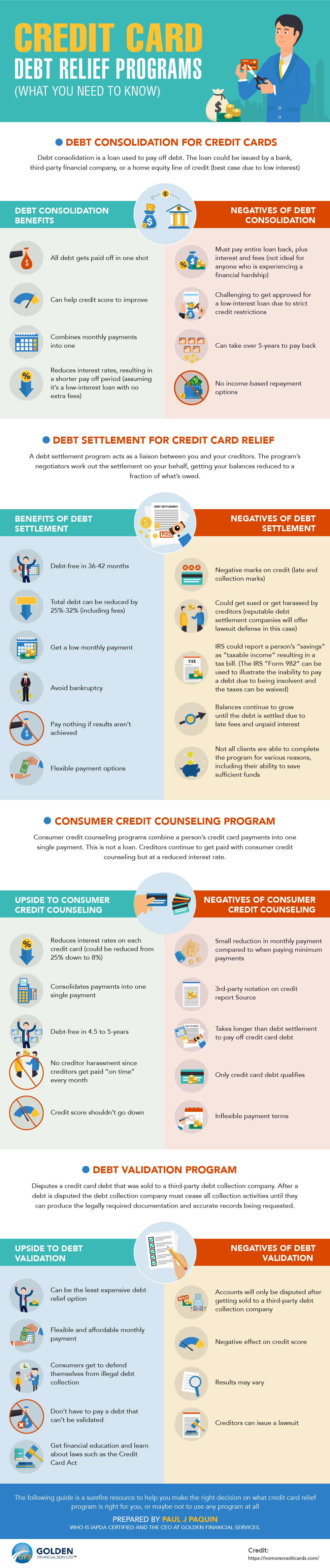
That liberates cash in the short term, and you may have 3 to four years to conserve towards the negotiation amount. Really hazardous to credit report scores, mainly because of missed repayments and an adverse "cleared up" mark that might stay on your credit score report for up to 7 yearsMay be just alternative if other alternatives (financial obligation loan consolidation, balance transfer charge card, debt forgiveness) aren't possibleTypically calls for a charge to the 3rd party, which could balance out some or every one of the cost savings from financial obligation settlementMay assist you avoid personal bankruptcy if you've missed numerous paymentsNot all lenders function with debt settlement firms Financial obligation mercy may be appropriate for you if you are experiencing a monetary difficulty that makes it nearly difficult to pay for your financial debt balances.
:max_bytes(150000):strip_icc()/DebtRelief-BestDebtReliefCompaniesImage-65c32a5716014aeca3a4e55477cb8130.png)
With a DMP, you make one monthly repayment to the credit scores therapy firm. Those funds are then dispersed to creditors of your unsecured financial obligations, such as charge card and installment financings. The agency works with your financial institutions to minimize interest rates or forgo costs, however some creditors might decline such concessions.
It can assist you pay down debt if you're able to secure a loan price that's reduced than the average price of the accounts you're consolidating. You need to avoid from racking up debt on those recently removed accounts or your debt can expand also higher.
That offers you lots of time to get rid of or significantly lower your balance while making interest-free payments.
No-Cost Accessible Financial Literacy Workshops Offered by APFSC - Questions
You may require it if your lender or a debt collection agency ever tries to collect on the debt in the future. The letter can confirm you do not owe what the collection company's records reveal. Yes, in many cases, the IRS considers forgiven financial debt as gross income. When a lending institution forgives $600 or even more, they are required to send you Form 1099-C.
Financial debt mercy or settlement practically constantly harms your credit report. Anytime you settle a debt for less than you owe, it may appear as "worked out" on your credit record and affect your credit report for seven years from the day of negotiation. Your credit scores can likewise go down substantially in the months causing the forgiveness if you fall behind on repayments.
Unknown Facts About What Regulations Guarantees When Pursuing Debt Relief
Tax obligation debt compromise programs Tax debt happens when the amount of taxes you owe exceeds what you have actually paid. This circumstance typically arises from underreporting earnings, not submitting returns on schedule, or inconsistencies found during an internal revenue service audit. The effects of gathering tax financial obligation are serious and can consist of tax obligation liens, which offer the internal revenue service a legal case to your residential or commercial property as protection for the financial obligation.
Incomes and Financial institution Accounts Internal revenue service can levy (confiscate) wages and financial institution accounts to satisfy the financial obligation. Building Seizure In extreme instances, the IRS can confiscate and sell property to cover the financial obligation.
Depression, anxiousness, and various other psychological health and wellness concerns. Social Preconception Dealing with lawsuit from the internal revenue service can bring social preconception. Damages to online reputation and partnerships. Work Opportunities A poor credit rating due to strain financial debt can restrict job opportunity. Difficulty searching for or keeping a work. Government Advantages Tax financial obligation might impact eligibility for government advantages, such as Social Safety and Medicaid.
Navigating Debt Forgiveness and Your Rights for Beginners
The OIC takes into consideration a number of aspects, including the taxpayer's income, expenditures, possession equity, and ability to pay. Effectively discussing an OIC can be intricate, requiring an extensive understanding of the internal revenue service's standards and a strong disagreement for why your deal lines up with your capability to pay. It is essential to note that not all applications are accepted, and the procedure needs in-depth economic disclosure.
The IRS examines your general financial scenario, including your revenue, expenses, possession equity, and capacity to pay. You need to additionally be current with all filing and payment needs and not remain in an open insolvency case. The internal revenue service likewise considers your conformity history, assessing whether you have a record of timely filing and paying tax obligations in previous years.
More About Does Student Loans & Debt Counseling: How APFSC Can Help Appropriate for Your Family
The application process for a Deal in Compromise involves several in-depth steps. Initially, you have to finish and send IRS Type 656, the Deal in Concession application, and Kind 433-A (OIC), a collection info declaration for people. These forms need extensive financial information, including information regarding your earnings, financial obligations, costs, and properties.
Back taxes, which are overdue taxes from previous years, can significantly boost your total internal revenue service financial debt if not attended to promptly. This financial debt can build up rate of interest and late repayment charges, making the initial amount owed much larger in time. Failing to repay taxes can cause the internal revenue service taking enforcement actions, such as providing a tax lien or levy versus your building.
It is essential to attend to back tax obligations as soon as feasible, either by paying the full quantity owed or by preparing a layaway plan with the IRS. By taking aggressive steps, you can avoid the buildup of added passion and penalties, and avoid much more hostile collection actions by the internal revenue service.
One common factor is the idea that the taxpayer can pay the complete quantity either as a swelling amount or through a layaway plan. The internal revenue service also considers the taxpayer's earnings, expenses, property equity, and future earning possibility. If these elements show that the taxpayer can manage to pay even more than the offered amount, the IRS is likely to reject the offer.
Little Known Questions About Is It Worthwhile to Invest in Professional Debt Counseling.
It is crucial to offer accurate and complete details in your application and to speak with a tax specialist to improve the chances of approval. Dealing with IRS financial debt can be complicated and difficult. Tax professionals, such as Certified public accountants, tax obligation lawyers, or signed up representatives, can provide important aid. They have the experience to navigate the ins and outs of tax obligation regulation and IRS procedures.

Table of Contents
Latest Posts
Regulatory Changes That May Transform Debt Relief Availability Can Be Fun For Everyone

The Greatest Guide To How to Begin Now
A Biased View of Legal Aspects Regarding Bankruptcy Proceedings
More
Latest Posts
Regulatory Changes That May Transform Debt Relief Availability Can Be Fun For Everyone
The Greatest Guide To How to Begin Now
A Biased View of Legal Aspects Regarding Bankruptcy Proceedings